How Basement Waterproofing Adds Peace of Mind During Storms

Anyone who has lived through a heavy overnight storm in a house with a vulnerable basement knows the particular kind of worry it creates. The rain starts tapping against the windows, the wind picks up, and somewhere in the back of your mind a question keeps circling: is water getting in downstairs?
That anxiety is not dramatic or abstract. It is practical. It sounds like listening for the sump pump at 2 a.m. It feels like walking down cold basement stairs with a flashlight, hoping the concrete floor is still dry. It often arrives after one bad experience, a soaked carpet, warped boxes, a ruined furnace control board, or the stale smell that lingers long after standing water is gone.
Basement Waterproofing changes that experience. It does more than help keep a lower level dry. It turns a storm from an event you brace for into one you simply ride out. That peace of mind has real value, especially in regions where intense rain has become more common, snowmelt can overwhelm the soil around a foundation, or older homes were built before modern drainage practices became standard.
A dry basement is about protection, but it is also about confidence in how your home performs when conditions are at their worst.
Storms test every weak point
A house can seem perfectly sound for most of the year and still struggle during a two-inch rain. That is because storm water exploits pressure, volume, and timing. Soil around the foundation becomes saturated. Water tables rise. Gutters overflow. Downspouts dump too close to the house. Tiny cracks that looked cosmetic in July become entry points in October.
Homeowners are often surprised by how small the original issue is. I have seen basements take on water because a downspout elbow popped loose during a storm and sent runoff straight against the wall for six hours. I have also seen seepage appear only after a week of repeated rain, when the ground had no more capacity to absorb moisture and hydrostatic pressure began pushing water through joints in the slab.
This is where good Basement Waterproofing earns its keep. It is not about one product or one magic coating. It is about controlling where water goes before it can build pressure around the structure or enter through vulnerable areas. When that system is designed well, the house behaves predictably, even when the weather does not.
The emotional cost of a wet basement is easy to underestimate
People usually focus first on visible damage. That makes sense. Water can ruin drywall, flooring, stored belongings, and electrical components in a matter of hours. Cleanup is expensive and disruptive. If the stormwater carries silt or sewage, the problem becomes far more serious.
But the mental load deserves equal attention. Once a basement has flooded, many homeowners stop fully trusting that part of the house. They become cautious about what they store there. They hesitate to finish the space. They keep checking weather alerts. Every forecast with the words heavy rain or flash flooding starts to feel personal.
That low-grade stress adds up. It changes how people use their homes. A basement that should be functional storage, a workshop, a guest room, or a family room becomes a risk zone.
When waterproofing is done properly, homeowners tend to describe the result in the same way, even if they use different words. They say they feel settled. They stop running downstairs to inspect corners every time a thunderstorm rolls through. They can leave town during rainy seasons without asking a neighbor to check the house. They begin to think of the basement as part of the home again, not a liability waiting for the next storm.
What Basement Waterproofing really includes
The term gets used loosely, and that can create confusion. Some people think it means painting a sealant on the interior walls. Others think it only refers to an exterior excavation project. In practice, waterproofing can involve several layers of defense, chosen according to the house, the site, and the source of the water.
A good contractor usually starts by identifying the water path. Is the problem mostly roof runoff that is not being carried away effectively? Is groundwater building pressure against the foundation? Are there cracks, failed wall penetrations, or cove joint leaks where the wall meets the floor? Is the lot sloped toward the house? Does the sump system have enough capacity, and does it have backup power?
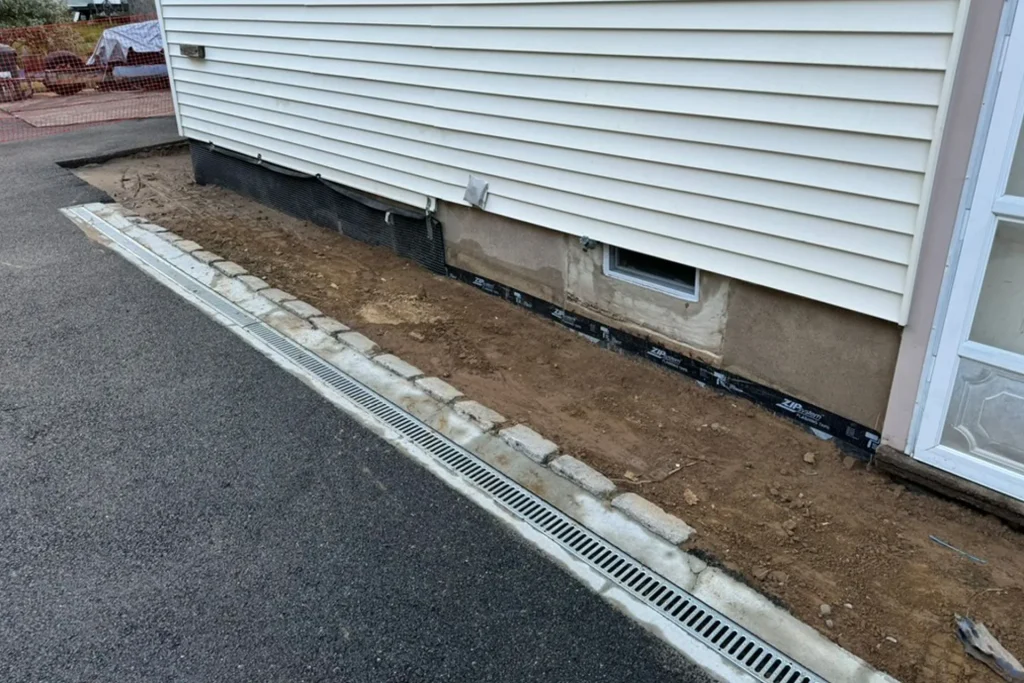
The answer may include exterior grading adjustments, longer downspout extensions, drain tile or French drain improvements, crack injections, vapor management, sump pump replacement, battery backup systems, or interior perimeter drainage. In some homes, a full exterior membrane system is appropriate. In others, a combination of targeted repairs and drainage upgrades solves the problem at a much more reasonable cost.
That distinction matters. Peace of mind comes from solving the actual cause, not from paying for the biggest package. A basement can stay dry through storms because the design is right, not because the marketing was persuasive.
Why storms make existing flaws show up fast
During dry weather, many basement problems stay hidden. A hairline crack may never leak when the surrounding soil is relatively dry. A slightly undersized sump pump may seem fine through ordinary rain. A foundation drain partially clogged with sediment may still limp along until a severe storm overloads it.
Storms compress time. They throw a large amount of water at the house all at once. That is what exposes weaknesses.
Hydrostatic pressure is one of the main reasons. When the soil around a foundation becomes saturated, water presses against the below-grade walls and slab. Concrete is durable, but it is not immune to moisture movement. Water finds pores, joints, and imperfections. If the drainage path outside the home is poor, the pressure remains high for longer, which raises the chance of seepage.
Then there is simple volume management. A roof can shed hundreds of gallons during a strong rain. If gutters are clogged, downspouts are short, or yard drainage is poorly directed, a surprising share of that water may end up right next to the foundation. Even a newer home can struggle under those conditions.
Basement Waterproofing reduces uncertainty because it addresses these mechanics directly. The system may not stop the storm, but it keeps the storm from turning into an interior problem.
The hidden damage waterproofing helps prevent
Most homeowners picture standing water when they think about a basement issue, but smaller, repeated moisture events often create the most expensive long-term consequences. A little seepage around the perimeter may not look dramatic, yet it can quietly affect multiple parts of the home.
Wood framing near the slab can absorb moisture over time. Insulation can lose performance. Drywall can wick water upward and break down from the bottom edge. Metal components can corrode. Flooring adhesives can fail. Stored paper, fabric, and cardboard become a food source for mold if humidity remains high enough.
Mechanical systems are also at risk. Furnaces, water heaters, dehumidifiers, and electrical panels are often located in basements. Even minor flooding can shorten equipment life or create safety concerns. Replacing one damaged appliance can cost more than a homeowner expected to spend on prevention in the first place.
There is also the air quality factor. A damp basement affects more than the basement. Air moves through a house, and moisture-related odors travel with it. People often describe the smell first, before they identify the source. That musty scent after a storm is not just unpleasant. It is a sign that the space is staying wetter than it should.
Waterproofing supports the way people actually live
One of the more practical benefits of Basement Waterproofing is that it lets people use their homes with fewer compromises. That matters whether the basement is unfinished or fully renovated.
For an unfinished basement, the gain may be straightforward. Homeowners can store seasonal items, tools, archived documents, or spare furniture without wrapping everything in plastic bins and hoping for the best. They can place valuables where there is room for them, instead of crowding closets on upper floors.
For a finished basement, the stakes are higher. Carpet, trim, built-ins, electronics, and furniture turn even a modest water intrusion into a major claim. Families who use lower levels as playrooms, home offices, gyms, or in-law suites need reliability, not crossed fingers.
I have known homeowners who delayed finishing a basement for years because they did not trust it through spring rains. After proper waterproofing, they moved ahead with the project and actually used the space. The value there was not just financial. It changed the flow of daily life in the house.
Not every fix needs to be massive, but every fix needs to be honest
One reason homeowners hesitate is that basement work has a reputation for high cost and aggressive sales tactics. Sometimes that reputation is deserved. Moisture problems make people nervous, and nervous customers are easy to pressure.
The best waterproofing recommendations are usually the ones that make clear distinctions between urgent needs, smart improvements, and optional upgrades. If a house has occasional humidity but no seepage, the answer may center on dehumidification and air sealing, not excavation. If the primary issue is roof runoff, gutter and grading corrections may do more good than interior wall coatings. If the basement floods because the sump pump fails during outages, a battery or water-powered backup may provide the biggest improvement in peace of mind.
There are also homes where broad intervention is justified. Older foundations, chronic lateral seepage, or repeated flooding events may require interior drainage channels, exterior membrane work, or major yard drainage redesign. The point is not to minimize the problem. The point is to match the remedy to the risk.
A useful rule is this: if the proposed waterproofing system does not begin with a convincing explanation of how water is reaching the basement, keep asking questions.
What homeowners should look for before storm season
Storm preparedness is more effective when it happens before the forecast turns ugly. A basement often gives subtle warnings well in advance. They are easy to dismiss because each one seems minor on its own.
Here are a few signs worth taking seriously:
- A musty odor that gets stronger after rain
- White mineral deposits on foundation walls
- Rust on metal shelving, appliances, or fasteners near the floor
- Damp spots, peeling paint, or staining along the wall-floor joint
- A sump pump that runs constantly, cycles oddly, or sounds strained
None of those guarantees a major water problem, but each suggests that moisture is moving where it should not. Addressing that early is usually cheaper than waiting for a storm to confirm the diagnosis in dramatic fashion.
Peace of mind often comes from redundancy
People tend to think in terms of whether a waterproofing system exists. In real life, reliability often depends on whether the system has backup layers. Storms create failures in clusters. The rain is heavy, the power goes out, the pump works harder than usual, and the one time it is most needed becomes the one time it cannot perform.
That is why redundancy matters so much. A primary sump pump with a battery backup is not overkill in many regions. Neither is an alarm that alerts the homeowner when water rises above a safe level. Nor are downspout extensions that carry runoff well away from the foundation, even when the yard already appears to slope correctly.
The most reassuring homes are rarely relying on a single line of defense. They have grading that sheds water, gutters that are maintained, drains that are functional, cracks that are sealed, and pumps that are supported by backup plans. If one element is stressed, another helps carry the load.
That layered approach is what makes people sleep better during a storm. They know the house is not counting on one component working perfectly under pressure.
Choosing the right approach for an older home
Older homes deserve a special mention because they often come with quirks that do not fit standard assumptions. A fieldstone foundation behaves differently from poured concrete. A house built decades ago may sit on a lot that has changed significantly as neighboring properties, patios, gardens, and driveways were added. What worked once may no longer work under current drainage conditions.
Older basements are also more likely to have tolerated some moisture historically because they were not intended to be finished living space. That does not mean a wet basement should be ignored. It means expectations and solutions should be calibrated carefully.
Sometimes the goal is complete dryness suitable for finished use. Sometimes the goal is a stable, manageable utility space with no standing water and controlled humidity. The right waterproofing strategy depends on what the space is, how the structure was built, and how the owner plans to use it over time.
That kind of judgment comes from inspection and experience, not from forcing every basement into the same sales script.
The financial side is only part of the value
Homeowners naturally ask whether waterproofing pays off. In strict resale terms, a dry basement is easier to market than a damp one, and documented improvements can reassure buyers. Water issues are among the first things cautious buyers notice, especially if there is staining, odor, or a dehumidifier running full blast in the corner.
Still, the stronger argument is often about loss prevention and daily comfort. One avoided flood can offset a meaningful share of the investment. So can preserving a finished basement, preventing mold remediation, or keeping a furnace and water heater out of harm's way.
Then there is the value that does not fit neatly into a spreadsheet. It is the value of not rushing home during a storm. It is the value of not moving everything off the floor every https://damienpivj126.brightsora.com/posts/the-pros-and-cons-of-interior-basement-waterproofing-systems time rain is forecast. It is the value of trusting your own house.
That is what many people are really buying when they invest in Basement Waterproofing. They are buying predictability.
Questions worth asking a contractor
The quality of the installation matters as much as the concept. A well-designed system installed poorly can leave a homeowner with the same anxiety and a lighter bank account. A few direct questions can reveal a lot about whether the contractor is diagnosing or simply selling.
Before signing anything, ask about these points:
- Where is the water coming from, specifically?
- Which parts of the proposed system address that path?
- What maintenance will the system require?
- What happens if the power goes out during a storm?
- Which repairs are essential now, and which could wait?
The answers should be clear and grounded in what the contractor observed at your property. Vague reassurances are not enough. The more concrete the explanation, the more confidence you can have that the recommendation is based on the home, not a template.
After waterproofing, maintenance still matters
No waterproofing system should be treated as a forever solution that never needs attention. Even excellent work relies on surrounding conditions that can change. Gutters fill with leaves. Downspouts get crushed by lawn equipment. Sump pumps age. Landscaping settles. Soil can erode or compact in ways that alter drainage patterns.
The good news is that maintenance is usually manageable if it is routine. Test the sump pump periodically. Check that discharge lines are clear and directed away from the foundation. Keep gutters clean. Watch for new cracks or changes in wall staining. If you have a battery backup, confirm the battery condition according to the manufacturer's guidance.
These are not glamorous tasks, but they preserve the peace of mind that waterproofing creates. Prevention works best when it remains active.
Storms feel different when the basement is protected
A house never becomes invincible. Extreme weather can overwhelm even well-prepared properties, and any honest discussion of waterproofing should admit that. But there is a wide gap between absolute guarantees and practical confidence. Most homeowners do not need perfection. They need a basement that can handle the storms their area predictably receives without turning into a recurring source of damage and stress.
That is the real promise of Basement Waterproofing. It gives structure to uncertainty. It replaces improvisation with planning. It reduces the chances that a hard rain becomes a long cleanup.
When a storm rolls in, that matters more than many people realize. The sound of rain on the roof stops feeling like a warning. It becomes what it should have been all along, weather happening outside while life continues normally inside.
ARD Waterproofing
98 Smull Ave, West Caldwell, NJ 07006, United States
+1 917-691-8411
FAQ About Basement Waterproofing
Can you 100% Waterproof a Basement in West Caldwell?
A properly designed system can substantially reduce basement water intrusion, but no method can promise protection against every flood, equipment failure, or future change in site conditions. The first step is identifying whether moisture comes from surface runoff, groundwater, plumbing, or condensation. Solutions may include grading and gutter improvements, drainage, foundation repairs, and a sump system. Review the specific coverage and exclusions of any written warranty.
How much does it cost to professionally waterproof a basement in NJ?
There is no single price that fits every basement. Cost depends on the cause of the leak, the area needing work, access, excavation requirements, drainage design, sump equipment, and restoration of disturbed finishes or landscaping. Request an on-site assessment and an itemized written estimate that explains the scope, exclusions, and maintenance requirements before comparing proposals.
How long does foundation waterproofing last in West Caldwell, NJ?
Service life varies with the waterproofing materials, installation quality, soil and water conditions, and maintenance. Drainage components and pumps may require servicing or replacement even when other parts of the system remain functional. Keep gutters, drainage outlets, and sump equipment maintained, and have recurring leaks or changes in foundation condition assessed. Ask for product-specific expectations and written warranty terms rather than relying on one lifespan for the entire system.